
The Louvre Museum is the largest art museum in the world and one of the most-visited, attracting around 10 million visitors every year. It is a Parisian icon, situated in the 1st arrondissement within a sprawling palace, easily recognizable by its size, splendor, and the modern glass pyramid which marks the museum’s entrance. Inside, visitors flock to famous artworks and archeological objects like the Mona Lisa or the Venus de Milo.

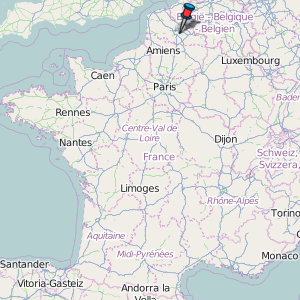
I always thought that the Louvre was one-of-a-kind, but when I was studying in Paris, I discovered that the Louvre has a few satellite museums in other cities, like the Louvre Abu Dhabi. The one I got to visit is a bit closer to the original, just 200 km north of Paris in a city called Lens.
A Little Bit About Lens
Lens is a city of 31,000 people in the Pas-de-Calais region of France. Lens suffered greatly during both World Wars and under Nazi occupation. Lens was also the site of the worst mining accident in European history, the Courrières mine disaster of 1906. Coal was the largest industry in Lens. Since the 1960’s the city has had economic difficulties as the coal mining industry shrank. The last coal mine in Lens closed in 1986. Following that closure, the population shrank yet again and unemployment rose to a rate well above the French average.
Why Lens?
The Louvre-Lens was created by the Ministry of Culture in an effort to diffuse art and culture throughout France. At the same time, there were hopes that the museum would help revitalize the region through tourism. This plan wasn’t limited to Lens, there is a Centre Pompidou in Metz, for example. This type of cultural policy exists in many places in Europe. Proponents of the Louvre-Lens plan took inspiration from the construction of the Guggenheim Museum in Bilbao, Spain which often receives partial credit for the economic revitalization of the city.
Lens was not only a good choice because of its economic problems, but also because of its location. This new Louvre needed to be in a place that was accessible by train. Tourists go to Paris to see all sorts of sites, but in Lens, the museum would be the sole attraction. That meant the city needed to have a well-connected train station. Lens is well-situated to attract visitors from Paris, but also people from northern Europe like Belgium, the UK, and the Netherlands.
The construction of the museum was criticized for several reasons. Some thought the project itself was patronizing. Some found the designs for the building ugly and too expensive. Others thought that this project devalued the Louvre as an institution. Another fear was that only Parisian intellectuals would come to visit the museum and that it wasn’t really for the inhabitants of Lens. Others still wondered whether the museum could truly be effective in its ambitious aims.
The Museum Itself
Louvre-Lens was designed by SANAA, a Japanese architecture firm who won the international design contest to create the museum. SANAA had designed other buildings like the Institute of Modern Art in Valencia, the Dior store in Tokyo and the Glass Pavilion of the Toledo Art Museum. The architecture itself is an important part of the museum’s installation in the city. The museum was built on the site of an old mine. Through this placement the museum replaces the old economic powerhouse of the city with the new, both symbolically and literally.

The building itself is very modern. The exterior walls are made of glass. The building is not especially large, especially compared to the Louvre, and the ceilings are low. The glass walls and small stature of the building serve to make it transparent and accessible to the public. It is not a building that aims to dominate the landscape of the city, but perhaps one that can integrate within the city. Despite efforts to be unobtrusive, the museum does stand out as a strikingly glittery, modern structure in a quiet town.
The Louvre-Lens is surrounded by a garden open to the public, prime real-estate for picnicking and relaxing. Thanks to the transparent walls, the garden serves as a continuation of the museum. This garden is crucial for the museum; it serves as a link between the museum and the city. The designers/masterminds of the project want the museum to be welcoming, so the garden and the cafe are important to ascertain that the museum is not just a cultural institution, but also a public space to be enjoyed by the people of Lens.
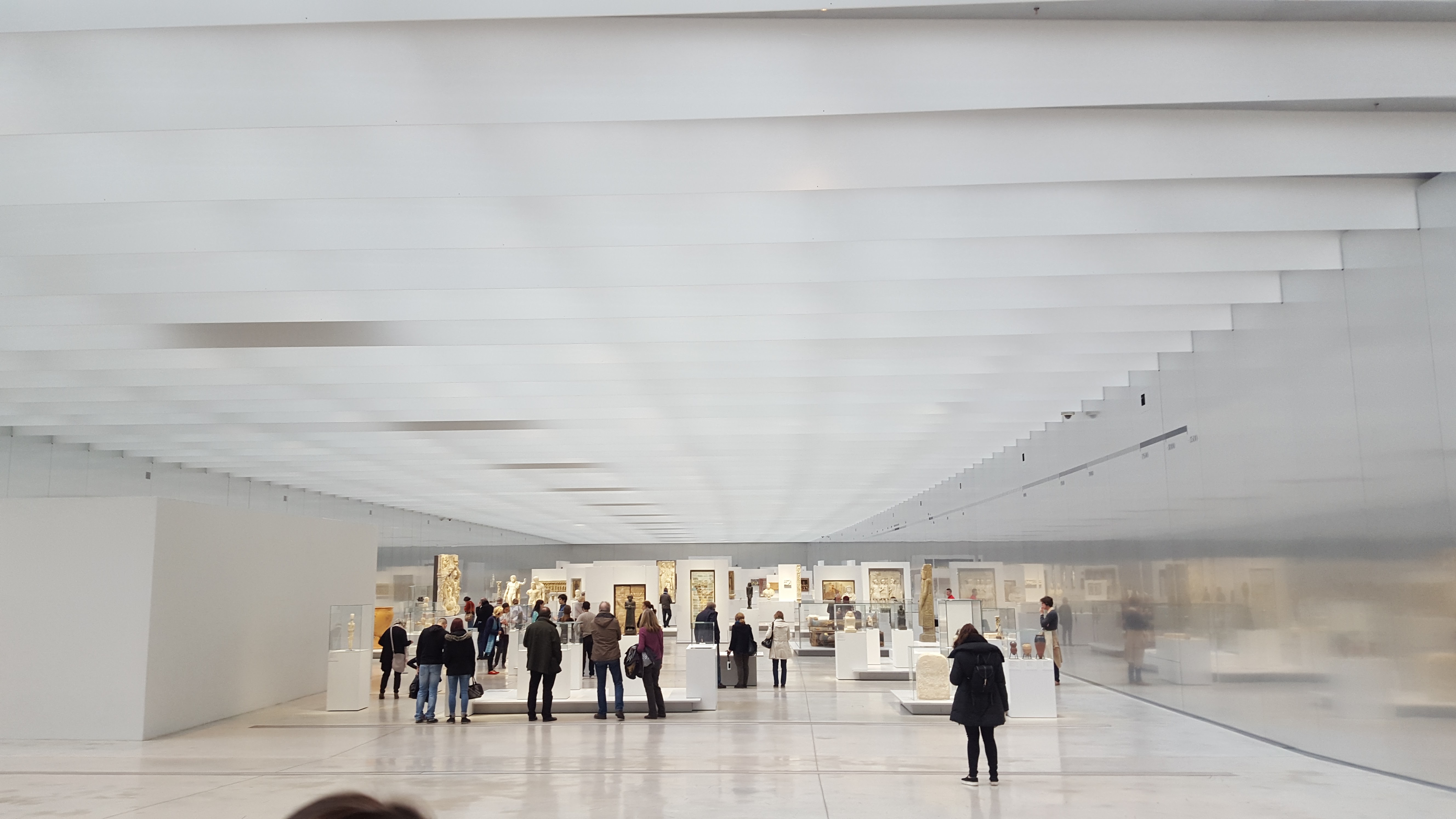
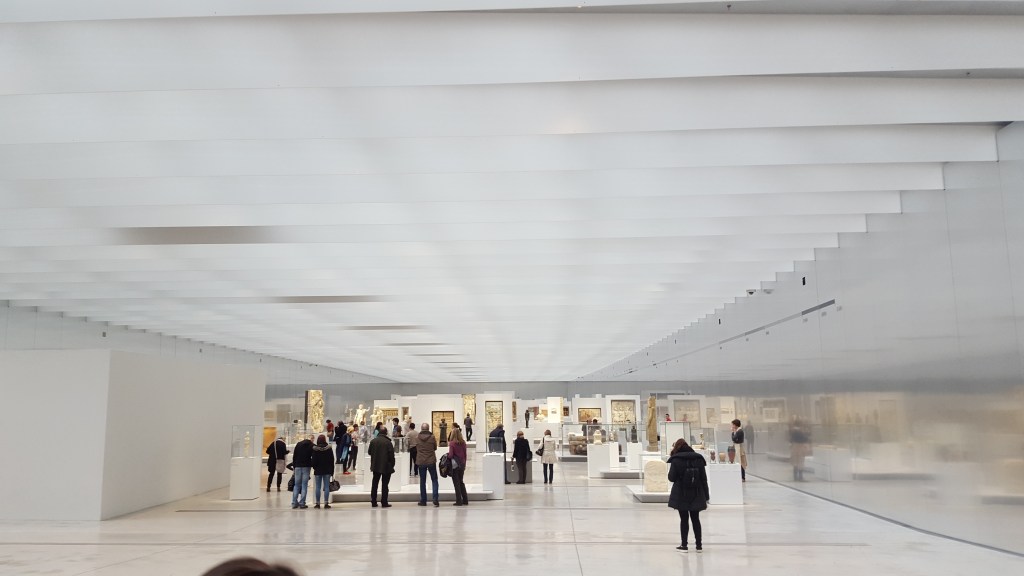
On the inside, the architecture is simple – another contrast to the intricately ornate Louvre. The atmosphere is cold, with white walls and walls made of steel. Of course, the Louvre-Lens attracts many fewer guests than the Louvre, which gives the visitors a better chance to be intimate with the art.
The curators in Lens have a unique, yet challenging job. The artwork in Lens is borrowed from the Louvre in Paris. There are 205 permanent pieces from the Louvre’s collection, some pieces which stay for a five year period, and a few temporary exhibitions throughout the year. The curators want to have famous pieces in order to attract visitors, but they don’t always have access to the most well-known works – some people visit the Louvre specifically in order to see these pieces. Even so, there have been major artworks displayed at Louvre Lens. When the museum opened, La Liberté guidant le peuple was the centerpiece of the exhibition.
Most of the artwork in the museum is displayed in a large gallery called the Gallery of Time. Unlike the Louvre, the pieces are organized chronologically, in one single gallery, without walls or divisions between them. The idea is to bring diverse cultures and civilizations together. It’s a big space with steel walls and bright overhead lighting. The art and artifacts are displayed from oldest to most recent, with the oldest objects closest to the entrance. They are also organized by origin: pieces from the West on the left and pieces from the East on the right. The exhibition guides the visitor on a path that takes them back and forth from one side to the other, from Western art to Eastern art. As the visitor travels physically throughout the gallery, they also travel through space and time in the history of art. The visitor’s experience at the Louvre-Lens is notably more intimate than at the Louvre, in that you may have the chance to be alone with any given piece in the gallery. While this is certainly true of some parts of the Louvre, others are constantly inundated with tourists.
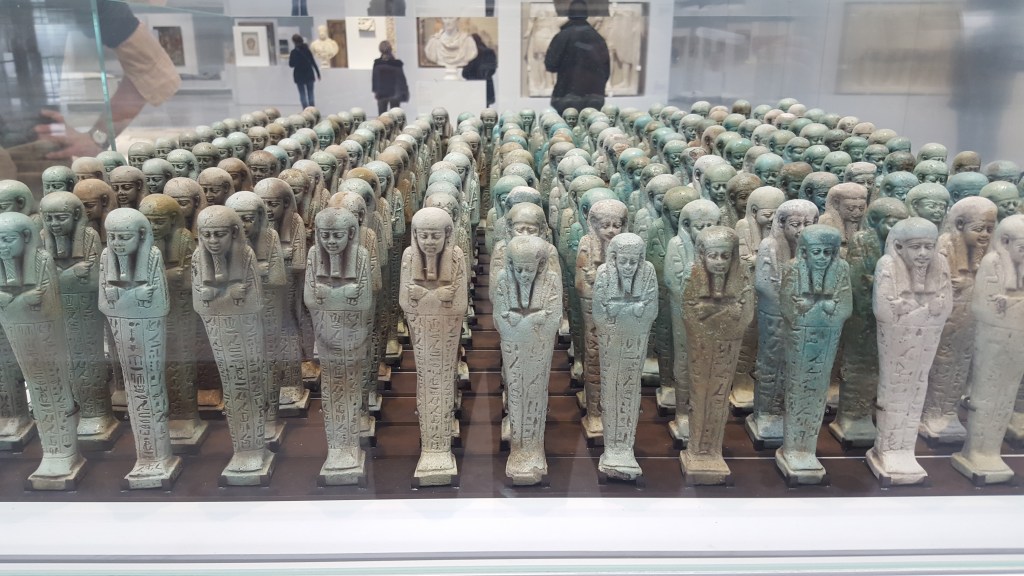
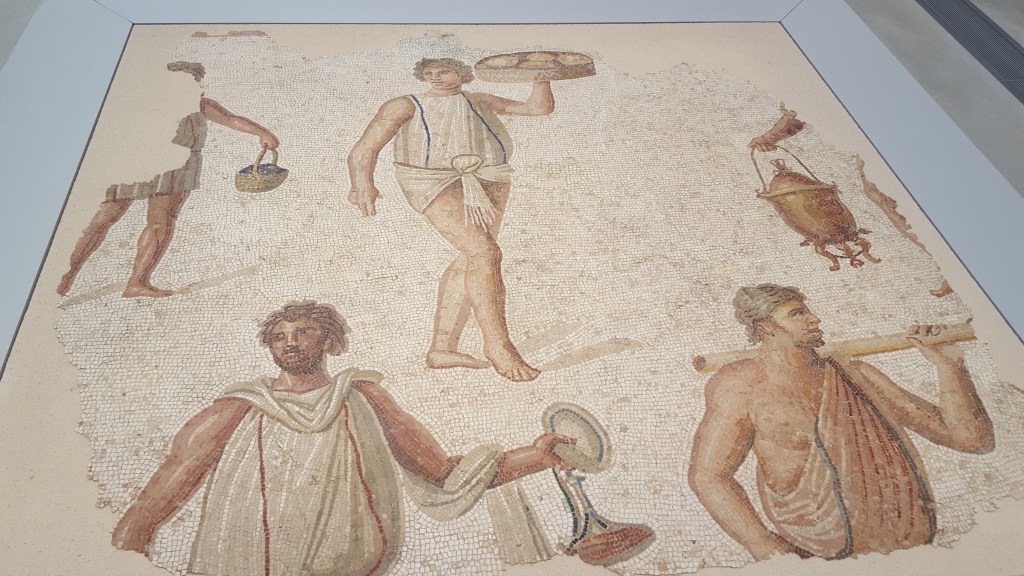
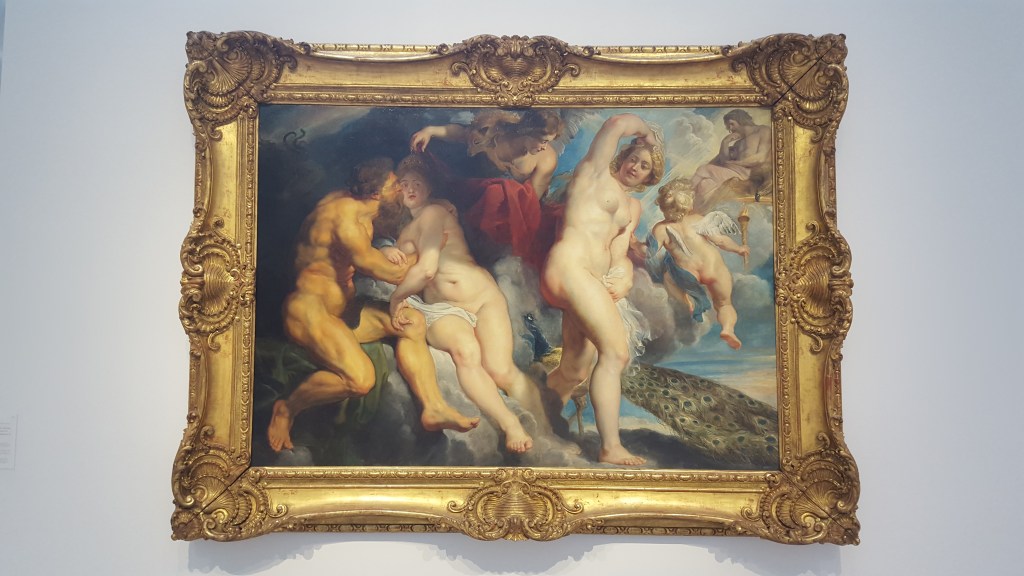
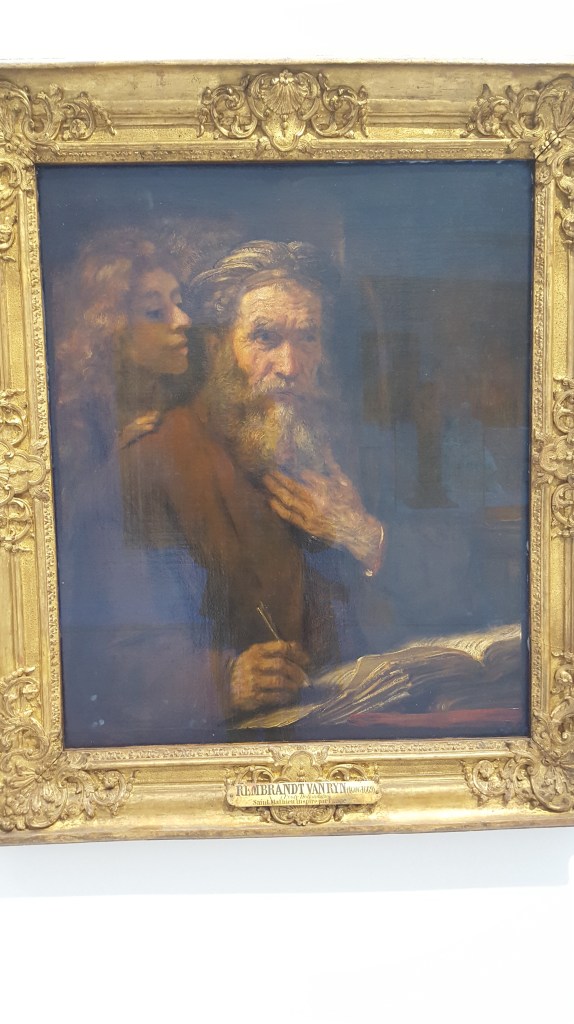
The Louvre-Lens is an interesting cultural policy project. This museum bears the name of the Louvre, but differs from it completely in terms of architecture, atmosphere, and concept. Though the artworks come from the vast collection of the Louvre, in Lens they are exhibited with a focus on simplicity and education, rather than tradition and grandeur.
I enjoyed my visit to the museum because there was a wide range of artwork and artifacts but in a manageable setting. The Louvre can be overwhelming because of its size and can come with a an urgency to see and do as much as possible. The Louvre-Lens may not have the Mona Lisa, but it does have lots of beautiful pieces in an environment where you can take your time and have some space to appreciate the art. If you’re looking for a day trip from Paris and you haven’t had your fill of museums, Louvre-Lens is a good option!
Nonetheless, my experience raised a lot of questions for me. Has this project been a success? From what I saw, Lens was still not prospering. Outside of the museum the city was very quiet and seemingly empty. The museum felt very separate from the city, its own isolated little bubble. Does the Louvre-Lens attract only the petit bourgeois of Paris who have the time and money to come visit? Or has the museum found its audience with Dutch and British tourists? Do the people of Lens like this museum and take advantage of what it has to offer? Does it benefit them? And even if the museum has been a success, is one museum, even with a name like the Louvre, enough to pull a city out of economic downturn?
Louvre-Lens provides an apt example of cultural politics in France, and demonstrates the power, importance, possibilities and limitations of art and culture.

 Raina Visions