

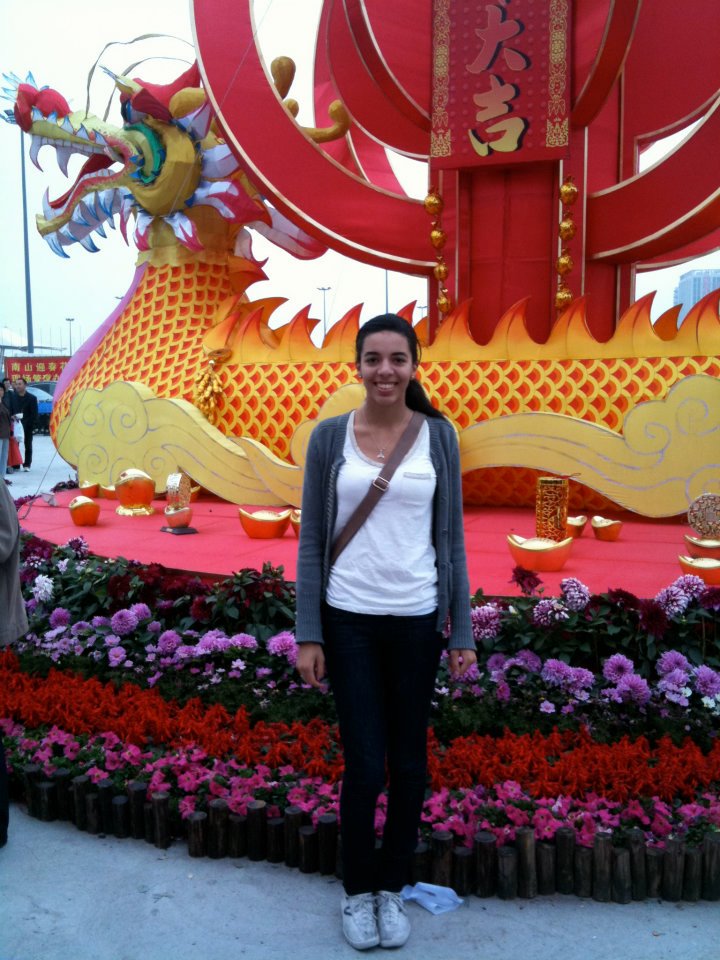
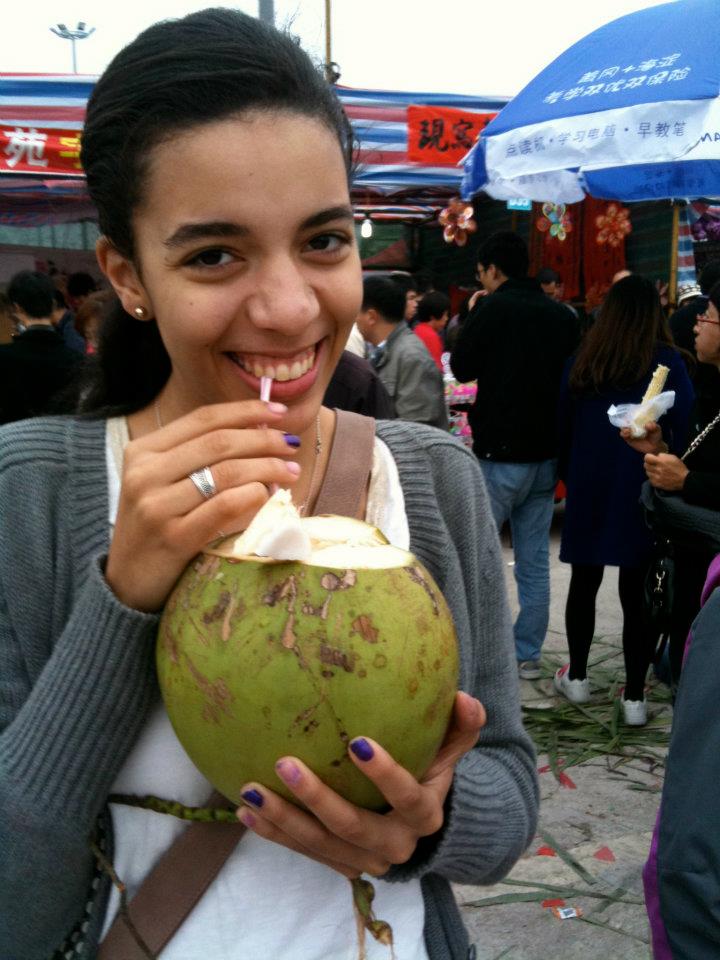
One of the first phrases I learned when I arrived in China was “Wǒ tīng bù dǒng” (我听不懂) which colloquially translates to “I don’t understand” but can be taken more literally to mean, “I’m listening but I don’t understand.” At 16, I had lived in Seattle for most of my life, and gone to the same school since 5th grade. Before my junior year of high school, I boarded a plane to Shenzhen with my mother and younger brothers to start a life in a city I had never heard of until I learned I would be living there.
China is not known for being a melting pot of races, however the homogeneity was overwhelming. Unlike an American city, where many might not know you’re a foreigner on sight, in China it is unmistakable. Quickly, you learn the words used to describe you. You hear them in whispers and shouts, from children and old people alike as they stare at you, sometimes with contempt sometimes with fascination, sometimes through the lens of a camera as you put up a hand to deflect the unwanted attention. Wàiguó rén (外国人) was the most neutral, simply “foreigner”, whereas lǎowài (老外) had a different connotation, more informal, sometimes friendly but sometimes rude, similar to the usage of the Spanish word gringo. Sometimes, it was worse. A co-worker of my mother’s was walking down the street when a Chinese man stopped to sneer at him, “Dà báizhū” (大白猪)- fat white pig.

Our neighborhood was residental, yet bustling, and nearly devoid of foreigners. We frequented a restaurant run by Chinese Muslims a few minutes away. There were photos on the wall of the menu items, which we pointed to and nodded without knowing as the waiters said the name of the dish back to us. Pointing and exaggerated gestures became the first of many so-called languages I learned in China.
The second was the language of the foreigners. Though we did not live in a very international area, I went to school 20 minutes away in Shekou 蛇口, which was relatively full of Western people and foreign restaurants. My friends lived here, and it from them that I learned how to barter, how to drive a motor scooter, how to walk into a night-club with confidence at the age of 16, where to find the cheapest illegal dvds, and more. They came from all over the world. I learned to say, “I love you” in Portuguese, and how to count to 10 in Japanese. I sung along to Spanish songs on the bus on our way to soccer (which everyone else called a variation of fùtbol or football) tournaments in Hong Kong or Guangzhou.
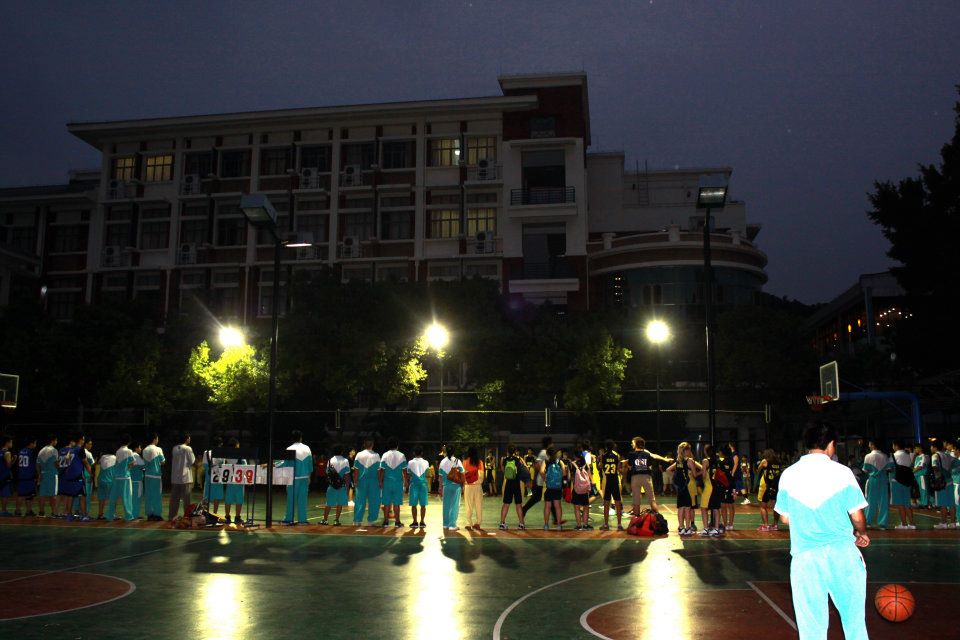
I also gained my first exposure to Chinglish (Though we were dealing with Mandarin, we always referred to it simply as Chinese). Soon enough, my sentences where peppered with Chinese words and phrases. Most were simple (where, what, I don’t know, right now, do you want, etc), but there was something fun about incorporating these little words into our lexicons and making them our own.
Aside from the actual bits of other languages I learned from other foreigners, I learned the language of the ex-pats. Some things were innocuous; Britishisms snuck their way into my vocabulary and I began saying pitch instead of field or take away instead of take-out. I learned how to convert to from Celsius to Fahrenheit quicker than you could say (9/5) + 32. I discovered that a typhoon warning was not cause for panic, but a nice break like a snow day might be for kids in the U.S.

Other words gave me pause. Classmates would talk about their Āyí, (auntie, but used to mean housekeeper), and how she would cook, clean, and the pittance she earned. “Local” meant ethnically and nationally Chinese, and was often used as an insult, especially between the American-born Chinese (ABCs). Even my friends’ repeated professions of “I don’t understand” to policemen when we’d get in scolded for sneaking into a pool late at night were tinged, because I knew that they did in fact understand. These language cues showed the social difference between foreigners and many Chinese nationals. The ex-pats knew that they tended to have more wealth, and that whiteness is often idealized and revered, thus they felt that some of the rules didn’t apply to them. Some of my peers didn’t take learning Chinese seriously, and it was this feeling of cultural superiority that caused their indifference. Although it made my commute longer in the mornings, I was happy to live in a Chinese neighborhood, because I never developed that sense of haughtiness. Chinese was the most valuable currency where I lived, and I was eager to gain as much as I could.
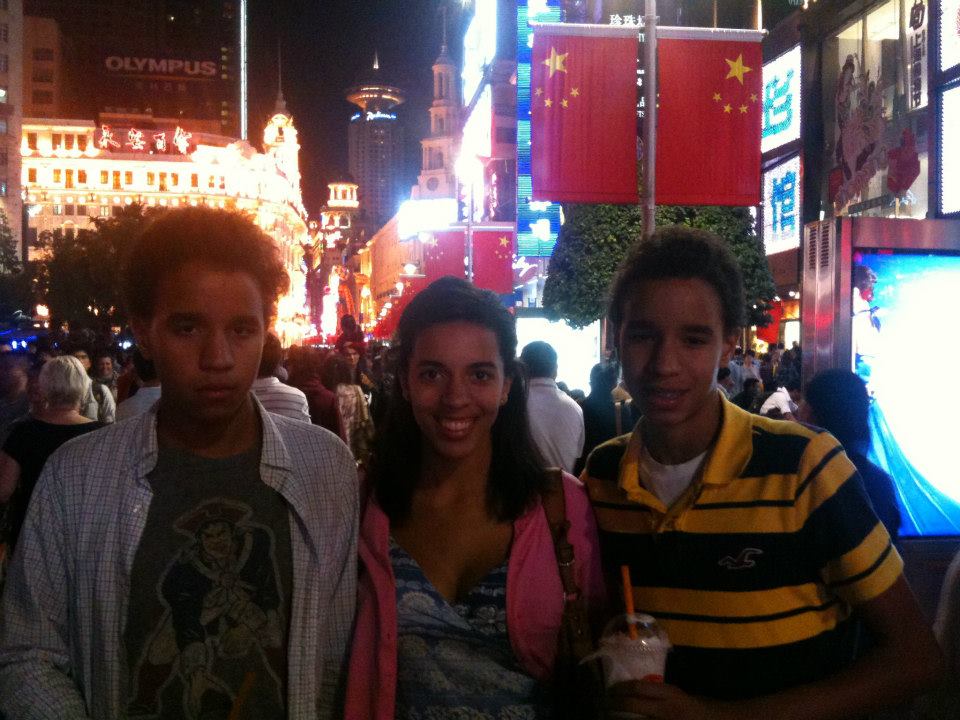
For those of us who were obviously foreign, there was no hope for assimilation as there might be for outsiders in a city like London or New York. This meant that every person who saw you knew that Chinese was not your first language, and that you probably didn’t speak it very well. I developed a boldness I didn’t know I was capable of. I became the spokesperson for my family, ordering our food in restaurants, asking for directions. Oftentimes, people were thrilled by my efforts, and were very encouraging
Though much of my Mandarin was learned from interaction, my class at school was what guided me the most. I would take concepts learned in class, and then try to apply them once I was on my own. I was always excited when I recognized characters on a sign in public, Túshū guan 图书馆 (library) being a particular favorite. Mandarin uses 4 tones, and the same word with a different tone can have a completely different meaning. However, to an English speaker, it can be difficult if not almost impossible to differentiate between these tones. Many of my classmates, myself included, would often speak a flat, toneless Mandarin, despite my teacher exaggeratedly making her voice go up and down with every word.
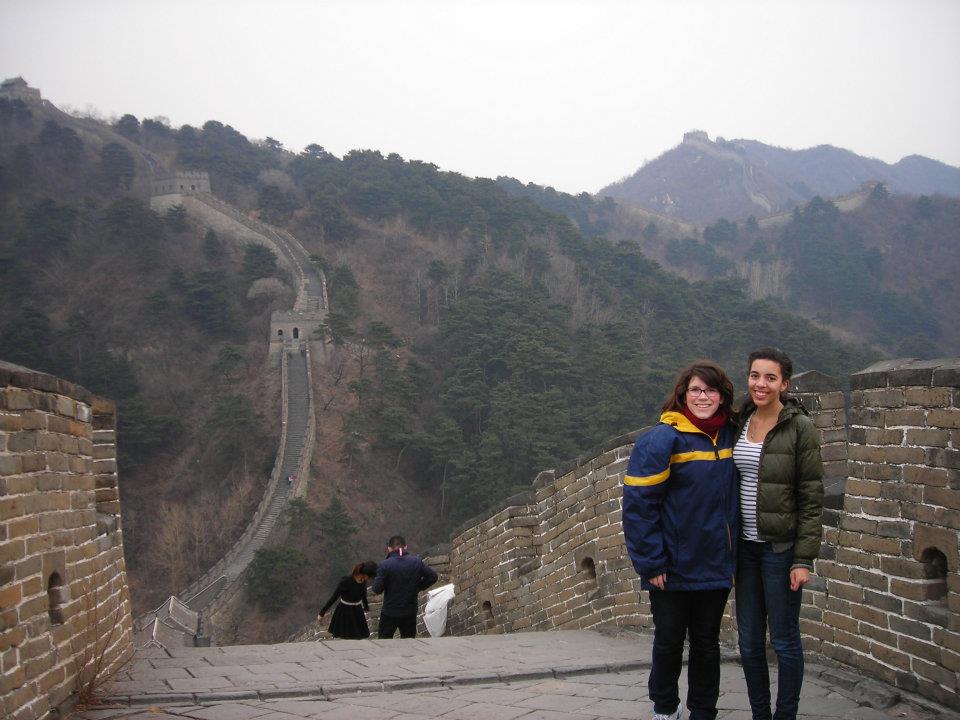
The hardest thing to adjust to was the reading and writing. I had learned languages in school before, and considered myself competent in French. With French, if you saw an unfamiliar word, you could attempt to sound it out, or see if it resembled an English word. With Chinese, each character is a word or part of a word. Many of these characters are based on an older pictographic style of writing. Some words are like a puzzle, for instance movie 电影 is “electric” and “shadow” put together. Others reveal the history of the country and language- China, 中国 Zhōngguó, is Middle Kingdom, a reminder of the ancient Chinese civilization that believed itself to be the center of the world. There was no sounding things out, you either knew the word or you didn’t. That meant memorization and writing characters over and over again in a little notebook I carried with me. If I had moved to Spain, I wouldn’t have known much Spanish, but at least the letters on signs and menus and in books would have had some meaning to me. In Shenzhen, learning how to read and write meant I had access to a whole other world that was previously obscure to me. These symbols slowly stopped looking like gibberish, and began to come together. It was exciting and overwhelming. I had to train my hand to write the characters and not draw them like a picture. I had to learn the stroke order and why it was important. I had to practice constantly, on paper, in the dust on my desk, the condensation of the bus windows, because without practice the words would just slip back into unintelligible lines.
Despite my interest, I knew I would never be fluent in Mandarin. However, it expanded my worldview, and gave me insight into a language and culture very different than but with much deeper roots than my own. So I left China with lots of new friends, knowledge, and experience, as well as a philosophy to always listen even if you don’t understand.

 Raina Visions
Great post 🙂
LikeLike
Thank you! 🙂
LikeLike